
Read the opening
I.
She stole the boots at quarter past four in the morning, which was, in Flick’s professional opinion, the ideal time to steal anything.
Quarter past four was the dead hour. The night watch had been standing six hours by then and their eyes had gone soft. The morning watch wasn’t up. The lamplighters had doused the crystal lanterns along Ratcatcher’s Row an hour before, and the new ones wouldn’t be lit until five, so for the better part of an hour the whole city sat in a pocket of grey nothing, too late for drunks and too early for bakers, and in that pocket Flick could go anywhere she liked.
The boots belonged to a badger quartermaster named Brundle, who’d left them outside his door to dry. They were two sizes too big and smelled of pipe smoke and saddle grease. Military issue, hardened leather, ankle-height, copper rivets she’d have to rub with mud so they wouldn’t catch the light. They were also the only boots in the Ranging Corps supply chain with intact soles, and Flick had been running reconnaissance with cardboard stuffed in her left shoe for three weeks. She’d filed a requisition twice. The second one came back with a stamp that said PENDING REVIEW, which was where forms went to die.
She took the boots. She left a dockweed flower on the doorstep, because she wasn’t a savage about it. Dockweed grew in gutters and nobody wanted it, which was most of why she liked it.
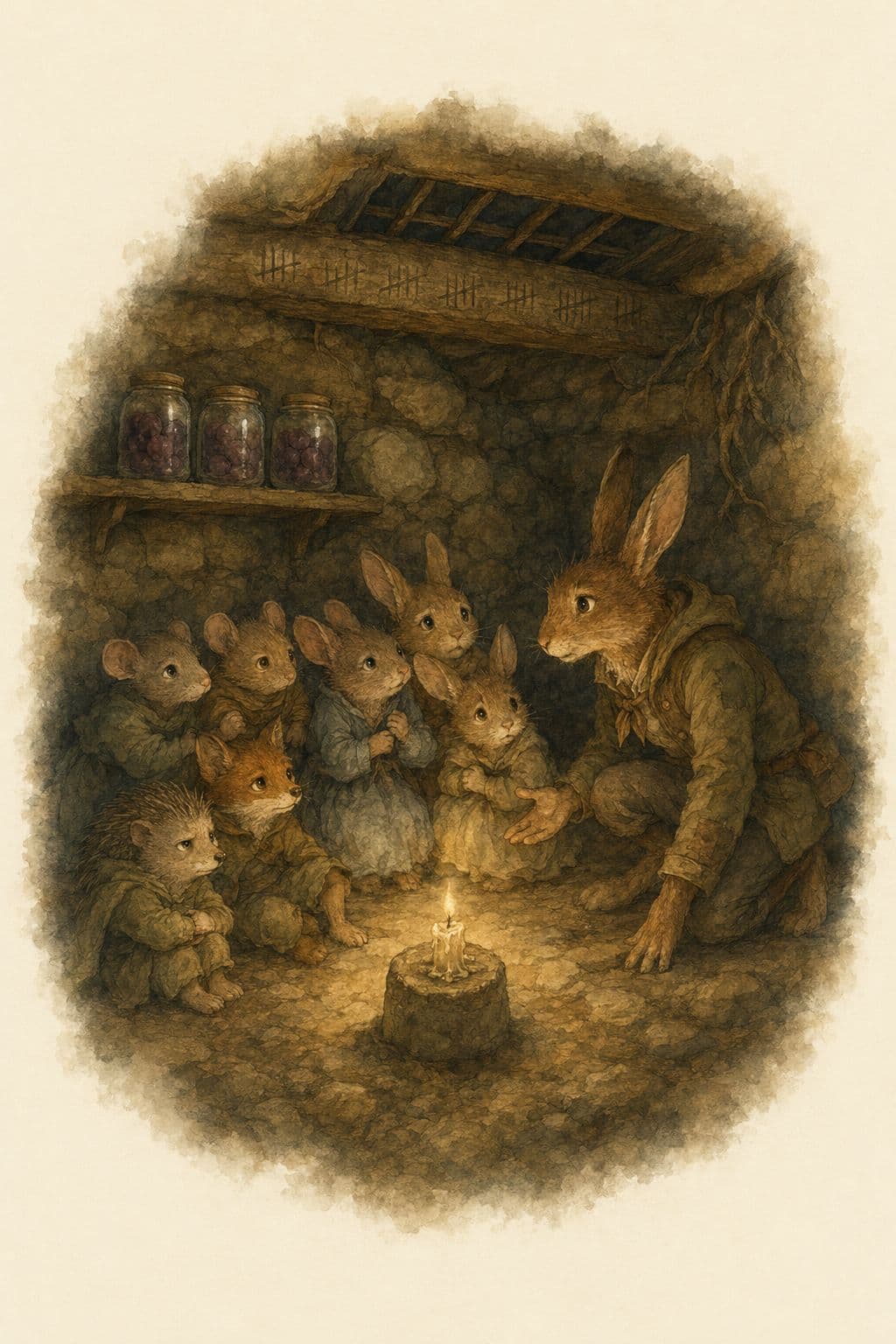
Her full name was Felicity. Somebody’s idea of a joke, she assumed, because there was nothing felicitous about being born in the Undercroft, the tangled warren of tunnels and half-collapsed basements under the Lumenhall’s market district where the animals who didn’t fit anywhere else made do. Her mother named her and died three days later, of the fever that came through the Undercroft every winter and took the very old and the very new. Her father was a question mark. That was literal. The parish clerk had written it in the register. Father: ?
The Undercroft raised her instead. The chestnut aunties who worked the grate above the sewer junction and let her sleep against the warm bricks. Old Fennel, the mouse who ran the pawnshop on Farthing Lane and taught her to read off the labels of stolen goods, so that her first written words were PROPERTY OF and TWELVE-YEAR MALT and DO NOT WIND. The loose network of market children who moved through the crowds like sparrows through a hedge, lifting wallets, palming apples, running. Always running. The one thing the city gave you free was the chance to leave any situation faster than it could close around you.
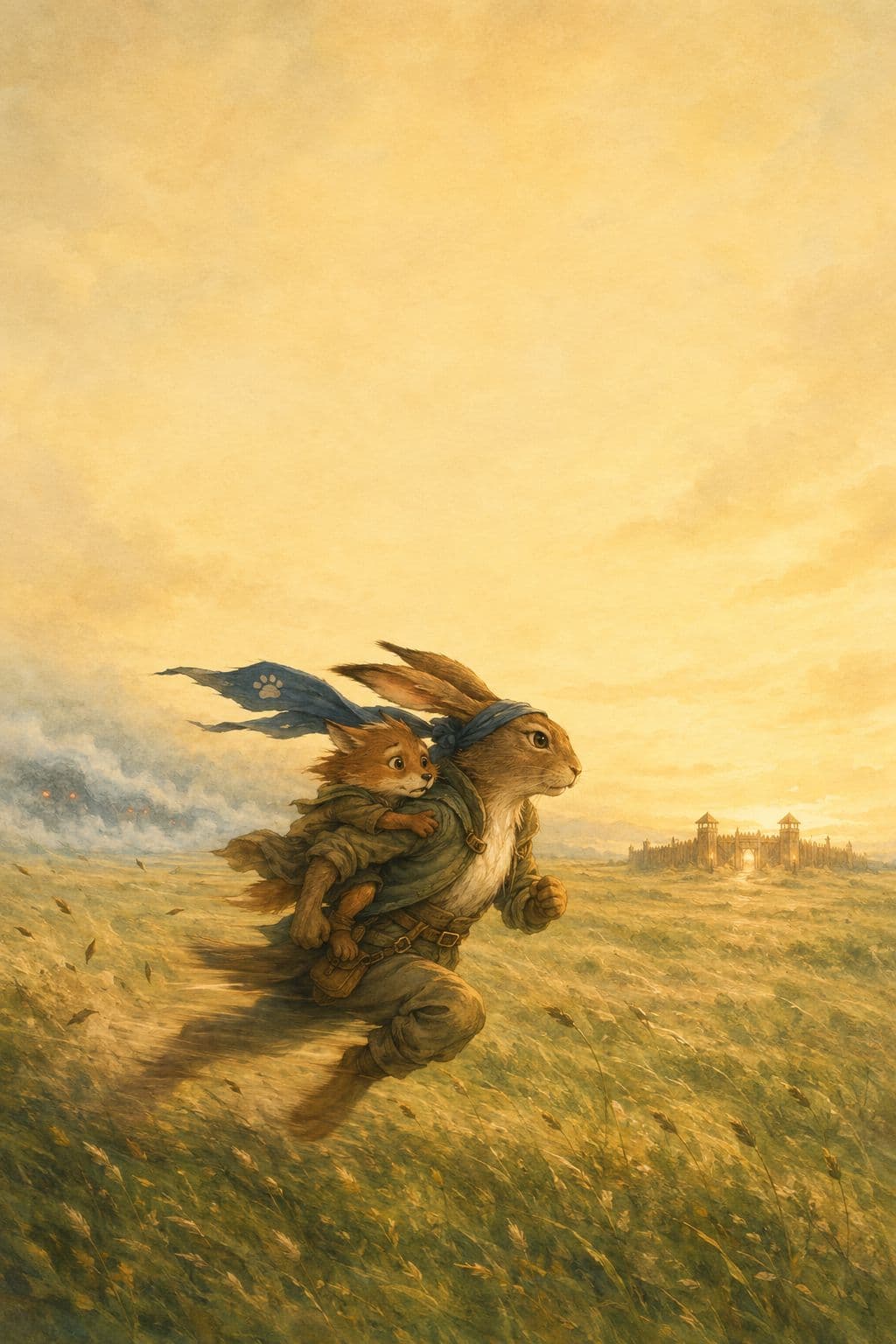
Flick was the fastest. That wasn’t boasting. Boasting implied exaggeration, and she didn’t need any. She was, by every measurable standard, the fastest rabbit in the Lumenhall, probably the fastest thing alive, and she’d been saying so since she was twelve, and no one had proved her wrong yet, and she remained open to challengers.
She was seventeen now. Five foot one. Rust-brown fur, a white blaze down her chest that she’d tried to dye three times because it caught the light like a flag, and a criminal record the Ranging Corps had agreed to overlook on account of her legs. She owned exactly one good thing: a thin dagger with a chipped bone handle, lifted off a drunk fox guard when she was thirteen. She kept it wrapped in oilcloth and mostly used it for apples.
Captain Thornwood had recruited her himself. Walked into the Undercroft, which surface animals did not do (the Undercroft wasn’t on any map, wasn’t acknowledged by the Council, sat in the same administrative blind spot as everything else inconvenient) and found her on a pipe junction eating an apple she’d stolen from his own supply cart.
“You’re the one they call Flick,” he said.
“Depends who’s asking.”
“Captain Thornwood. Ranging Corps.”
“Never heard of it.”
“Military scouts. Reconnaissance, frontier mapping, enemy assessment.”
“Sounds boring.”
“It involves a great deal of running.”
She looked at him then. Properly. A hare, tall, grey around the muzzle, the tip of his left ear missing from something he clearly wasn’t going to explain. He had the bearing of someone who had spent his whole life being exactly where he was supposed to be, and here he was in a place that didn’t exist, talking to a girl who didn’t exist either.
“Why me?”
“Because yesterday I watched you outrun two city guards across the rooftops while carrying a stolen ham. You cleared the gap between the tannery and the chandler’s shop. That’s nine feet. You didn’t slow down.”
“The ham was for Mrs. Barrow. She’s eighty and she can’t chew hard bread anymore.”
“I didn’t ask why you stole it.”
“I’m telling you anyway.”
Thornwood almost smiled. Almost. “Report to the grain store on Eastgate at dawn. Bring the apple.”
“I’ve eaten most of it.”
“Bring what’s left. Consider it your entrance exam.”
She went. Not because she trusted him. Trust was a luxury item, like new boots, like knowing your father’s name. She went because he’d walked into the Undercroft and spoken to her as if she were a person whose legs mattered, and that was rare enough to have its own gravity.
That’s the end of Part I.
The full illustrated edition is coming to the Goblin Den list. Join, and you’ll hear first when the stories are out.
Join the Den