
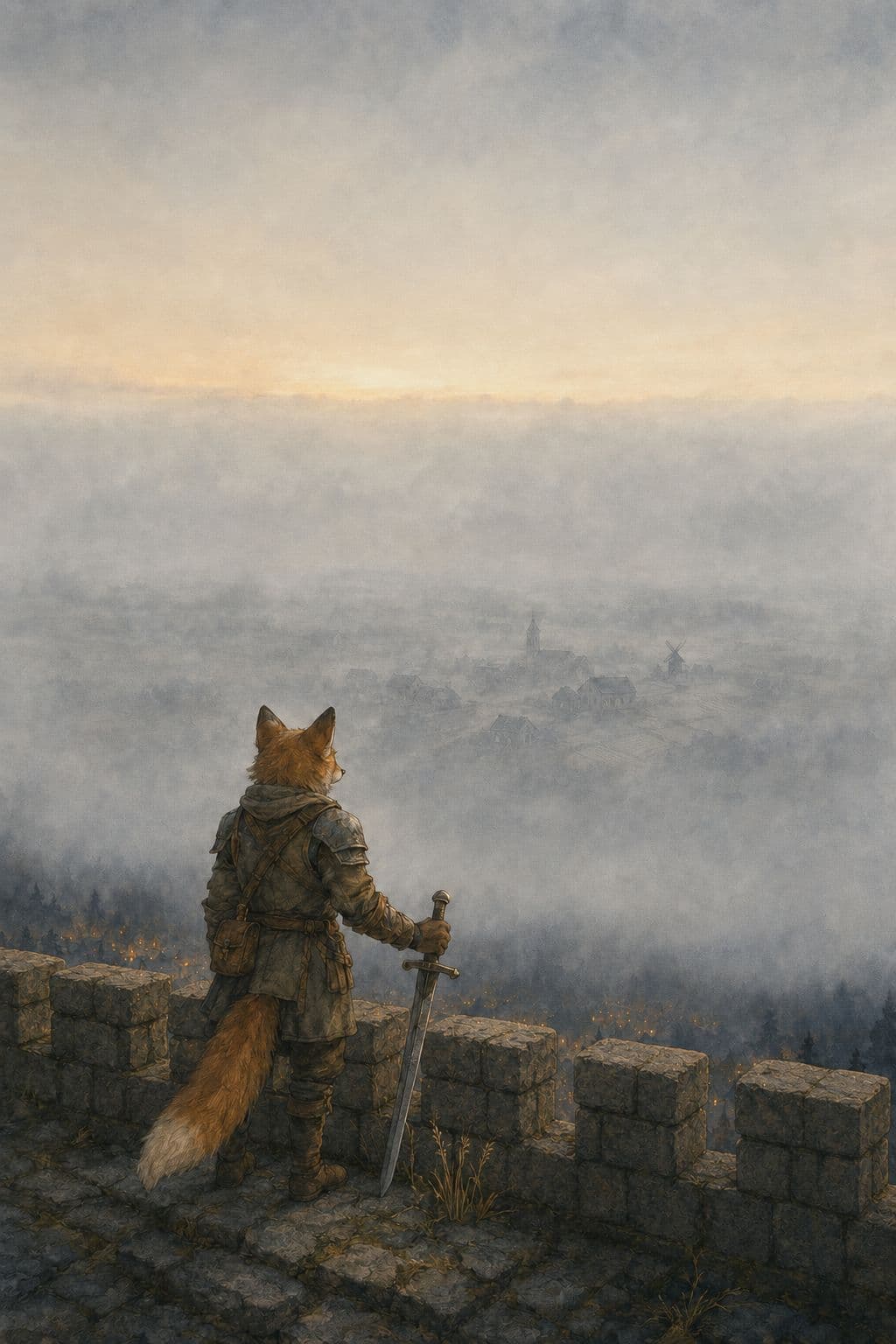
Read the opening
I.
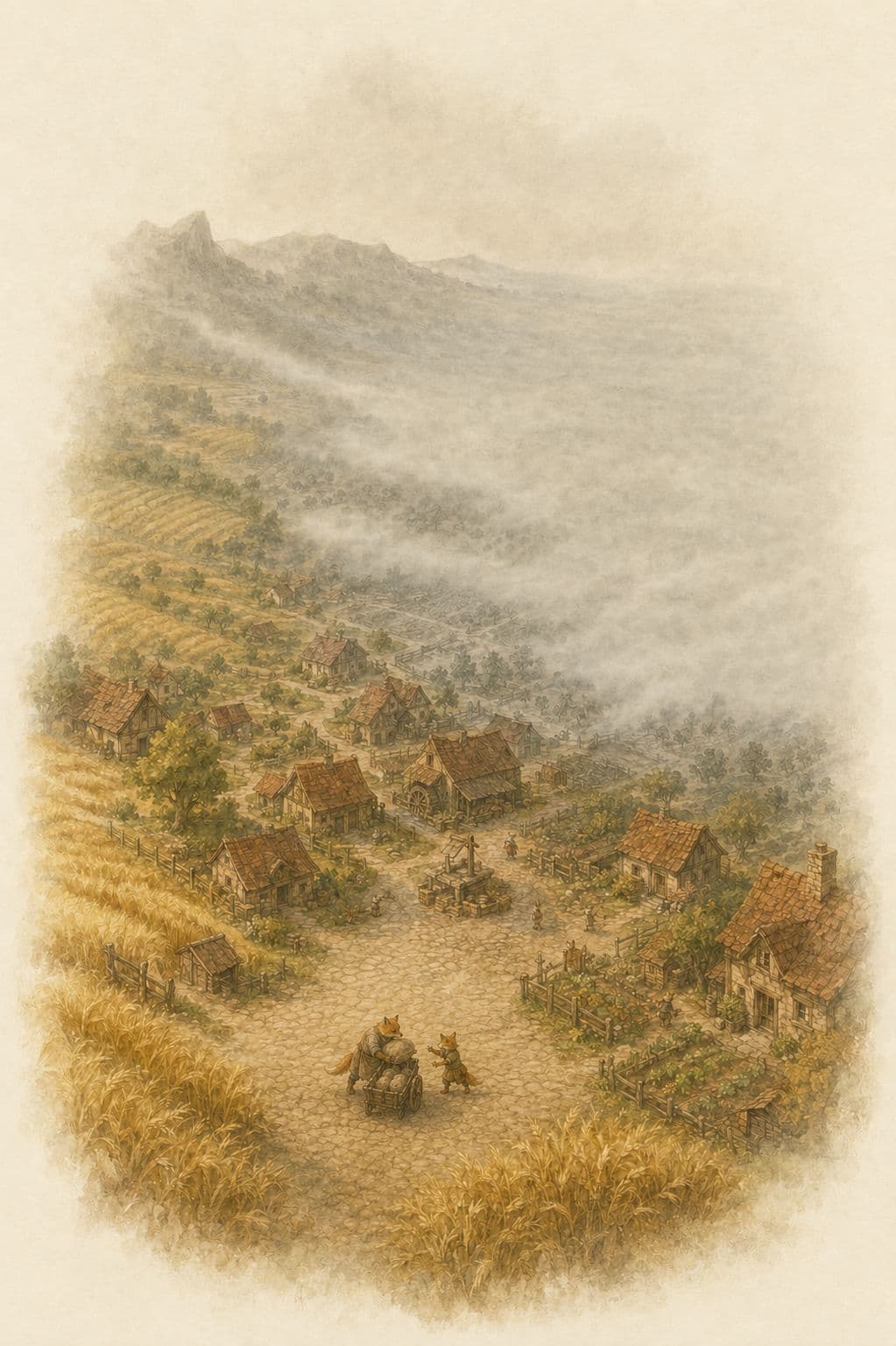
Millhaven ended on a Wednesday.
There was no fire. Fire would at least have left something, ash and char, a mark you could stand beside afterward and say, here, this is where it happened. What came down off the northern ridge at dawn was quieter than fire and a great deal more thorough. It rolled off the high ground like water filling a bowl, and where it touched, the world stopped being there.
Alden saw it from the east wheat rows. He was seventeen, up since before light, doing what he did every morning: walking the rows with his father’s almanac under one arm, checking the late grain for blight. The wheat stood nearly to his chin that year. He remembered afterward that his boots had soaked through at the seams and that he had been composing, in his head, a long complaint about the boots.
Then the northern sky turned grey. Not cloud grey. Something with weight in it, pressing down the ridge slow and patient, and the first thing he thought, before any fear got to him, was: the harvest isn’t in yet.
He ran for town, and the whole way down the rows the wheat heads slapped his arms like they were trying to hold him back.
The square was full when he got there. Foxes, rabbits, the mouse family who kept the bookshop on the corner, Garren the badger smith standing in his apron with a half-shod horse still tethered behind him. All of them watching the ridge. Nobody moving, because there was nowhere the mist wasn’t going to be.
His father was at the granary. Edric was a broad fox, quiet in the way of animals who spend their days with things that don’t talk back, and he was loading grain sacks onto the cart when Alden reached him. He went on loading while Alden told him about the mist.
“I can see it,” Edric said.
“We have to go.”
“We have to load the cart.”
“Da. There’s no time.”
Edric set the sack down. “There’s time for the grain or there’s no time for anything. Take the far end.”
They loaded the cart. Three hundred weight of late wheat, stacked and roped, while the mist ate the north orchards row by row and came on with no sound Alden ever managed to describe to anyone afterward. A pressure. Like the earth holding its breath. His mother came running with his sister. Lark was nine, and she was holding the wooden horse Edric had carved for her nameday, holding it by the head the way she had held it since she was five, and she was not crying, which was somehow worse than crying.
“South road,” Edric said. “Stay ahead of it.”
The south road was already jammed. Half the town had the same idea and the other half had no idea at all. Old Hester the rabbit stood in her doorway with her teacup, the white one with the forget-me-nots her late husband had painted orange, because he’d been colourblind and in forty years nobody had told him. She watched the mist come the way she watched weather. Alden shouted at her to move. “It’ll pass, love,” she said. “These things pass.” The cart was moving and he didn’t go back for her. He thought about that for years afterward, in a flat, practical way, like a debt he couldn’t pay.
They made half a mile. The mist didn’t bother with the road. It came around the flanks, east and west at once, and the column of refugees compressed, stopped, and broke apart into the fields.
Edric pulled the cart off the road, unhitched the horse, and put Alden’s mother and sister up on its back. “Field path,” he said. “Follow the irrigation ditch. It runs clear to the Greenway crossroads. Don’t stop for anybody.”
“Edric, please.”
“The grain stays with me. It’s three months of food for whoever gets out. Go.”
His mother went, with Lark, down the ditch line at a canter. Alden could have gone with them. He stayed, because his father stayed, and because the cart was heavy, and because he was seventeen and did not yet believe in the end of the world.
“You should’ve gone,” Edric said.
“You should’ve come.”
His father looked at him for a moment. Then he reached behind the cart seat and brought out a long bundle wrapped in oilcloth, and unwrapped it, and it was a sword. Not a farm tool. An officer’s blade, infantry pattern, the leather grip worn smooth by a hand. Alden had never seen it in his life.
“This was mine before the farm,” Edric said. “Before your mother. I never wanted it to be yours.” He held it out. “Take it anyway.”
“Before the farm? Da. What does that mean, before the farm?”
He never got the answer, because the mist reached them.
They always said the mist was cold. It wasn’t cold the way weather is cold; it was the cold of a cellar with nothing in it. No light, no wheat, no cart, no road. His father’s face went out like a blown lamp. Alden shouted and the sound fell dead a foot from his mouth, swallowed the way the grey swallowed everything. He swung the sword at it, which was stupid, and he knew it was stupid even while his arm was moving. The blade cut nothing. You can’t fence with weather.
He walked. Downhill, because downhill was away. He followed the slope and the memory of the ditch for an hour, or ten minutes, or a day, and when he stumbled out into hard sunlight at the Greenway crossroads the sword was in his hand and his father wasn’t anywhere.
No one ever saw Edric again. No one saw Millhaven again either, not properly. The maps kept the name for a while.
Alden sat down in the crossroads dust with the sword across his knees. He didn’t cry. Something else was happening in him instead, something with edges to it, settling in where the crying should have been. After a while he got up and started south, because his mother and sister were somewhere down the Greenway, and someone had to find them.
That’s the end of Part I.
The full illustrated edition is coming to the Goblin Den list. Join, and you’ll hear first when the stories are out.
Join the Den